
Discover the Fascinating World of Generative AI


In the hurricane of technological advancements and rapid evolution, it is essential to understand the mysteries of Generative AI. Well, Generative AI has been a powerhouse of innovation, setting up unlimited human-machine interaction opportunities. The vast realm of Generative AI solves problems with a creative approach, making it a forerunner of technological progress. Let us shed light on Generative AI capabilities, evolution, and use cases.
AI Models and Evolution of Generative AI Models
What is an AI Model?
An AI model refers to a computational structure of the system designed to perform specific tasks based on the input data. AI models generate content based on the input data and information they have been trained on.
How do AI Models work?
AI models operate through a process of training and inference. The AI model is exposed to a large dataset during the training phase. It learns patterns and relationships within the data. In the inference phase, the trained model uses its learned knowledge to generate new predictions or content.
The Need for Generative AI
Generative AI is the trendsetter in moving way ahead in novel content generation and predefined tasks. In contrast to AI models, Generative AI models can generate human-like text, images, or even music. Generative AI models can understand context, develop coherent responses, and exhibit creativity, from content generation to problem-solving.
Generative AI evolution
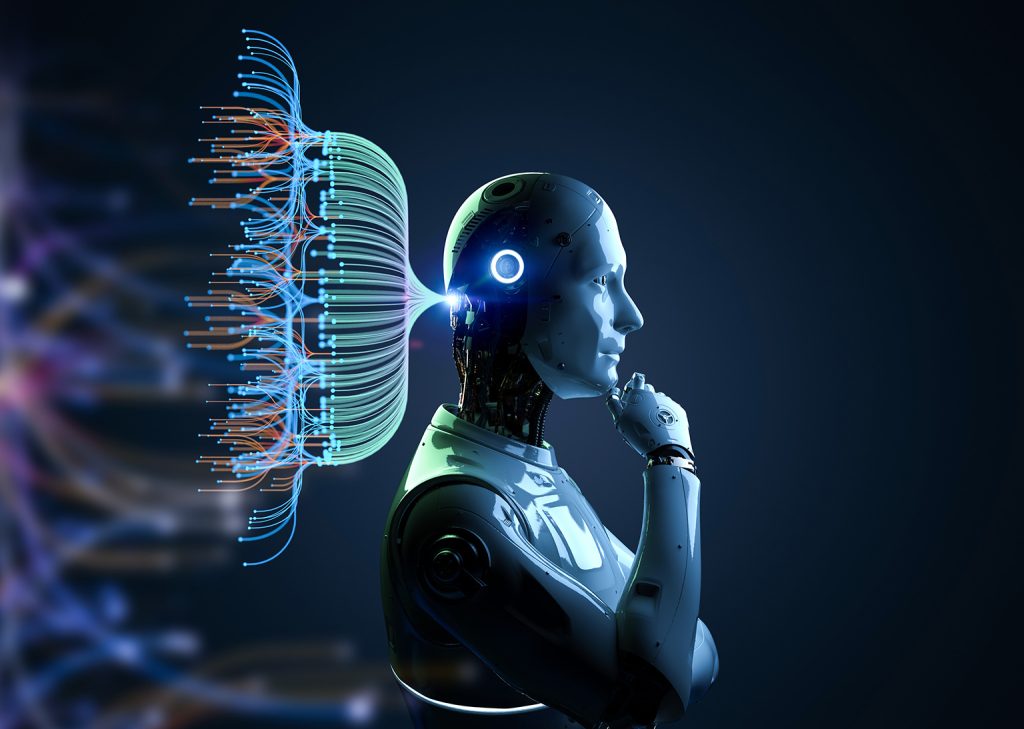
Tiny language models, often referred to as Baby GPT, showcase their learning journey through iterative training. Beginning with an untrained model responds with nonsensical characters. With 250 rounds of training, the model progresses to generating English letters, though still maintaining a mix of non-English characters. At 500 rounds, small and meaningful English words start emerging, demonstrating the model’s evolving linguistic capabilities. The journey continues by 5,000 rounds, and the model produces larger, meaningful words with improved sentence structure. After 30,000 rounds, coherent sentences form, showcasing the model’s enhanced predictive abilities. Endless iterations, even up to 50,000, produce refined outputs with contextually relevant and cohesive responses. However, it’s noted that, despite continuous training, the model eventually reaches a saturation phase, emphasizing the dynamic nature of the learning journey.
In brief, AI models are computational frameworks represented in mathematical format to carry out tasks. They learn data patterns, relationships, and features to make predictions. AI model generates output based on the input data and the patterns learned during the training.
Machine learning is used in AI models Supervised Learning Models, Unsupervised Learning Models, Reinforcement Learning Models. With the ever-changing artificial intelligence landscape, AI models can perform tasks based on structured data and patterns. Generative AI autonomously generates new content that is outside the input data scope.
At this intersection, the need for Generative AI becomes increasingly evident, propelling innovation and opening doors to applications that require an adaptive approach to problem-solving. As technology advances, the complementary relationship between conventional AI models and Generative AI becomes a key driver in pushing the boundaries of what artificial intelligence can achieve.
The introduction of AI models has taken a huge step forward. These models revealed an extraordinary ability to comprehend context, human preferences, and sophisticated data patterns. Knowing AI models helps in comprehending data processing, combining data components into cohesive narratives and replies.
Generative AI owes its remarkable capabilities to an understanding of context as that of humans. For example, contextual shifts in language determine the difference between a “river bank” and a “bank” where money is stored; generative AI leverages the concept of attention. In the spoken example, the word “bank” has distinct meanings depending on the preceding context of swimming across a river or driving across a street. With this contextual awareness, generative AIs can understand and generate coherent, contextually relevant content.
In machine learning, the translation of context is achieved through a multi-step process. Text is first transformed into tokens, which are then vectorized. Through this vectorization, weights are assigned to the tokens, capturing the significance of each element in the context. These weights undergo normalization, a crucial step that ensures a balanced and meaningful representation. The resulting normalized weights serve as the foundation for the learning process of the neural network or algorithm. This intricate methodology, diverging from traditional approaches like RNNS, Gans, or LSTMS, enables generative AI models to produce outputs of superior quality and coherence.
Supervised/Unsupervised/Reinforcement Learn models vs Generative AI models
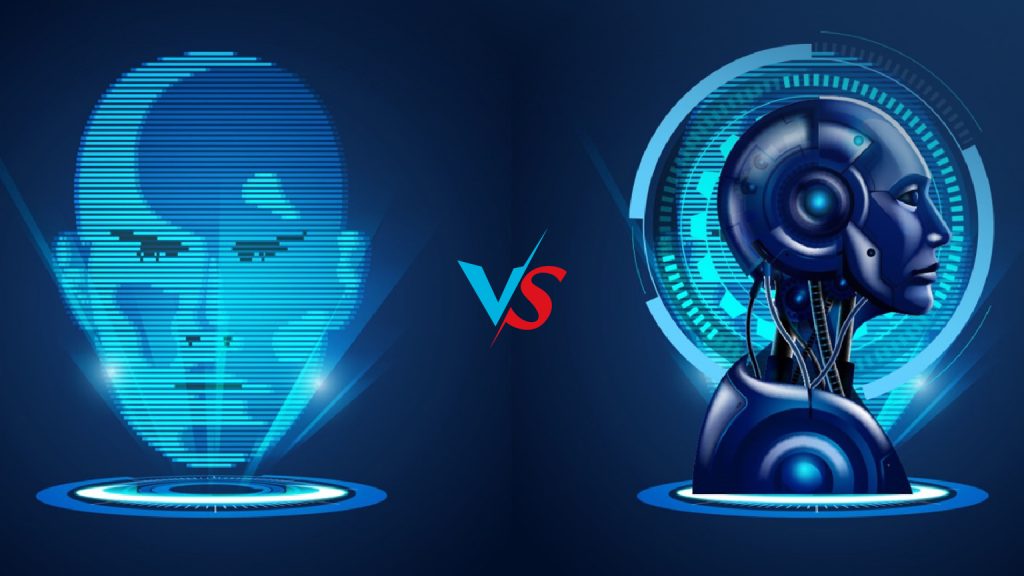
Supervised Learning Models: These models working based on the training of labeled datasets. The input data is combined with associated output labels. The model maps input to output by learning through the provided examples.
Unsupervised Learning Models: These models explore data without labeled outputs. Unsupervised learning models learn patterns, relationships, or structures within the data.
Reinforcement Learning Models: By interacting with the real-time environment. These models learn through interaction with an environment. Reinforcement receives feedback in the form of rewards or penalties based on the actions.
Generative Models: Generative models create new data based on the training data. GPT possesses the ability to generate contextual relevant text.
History of GPT
How GPT has become torch barrier for Generative AI
The history of the Generative Pre-trained Transformer (GPT) steps into several iterations, which are improved upon its predecessor. Let us check out the key milestones:
2015: Introduction of Transformers
In 2015, Google scientists introduced transformers in the “Attention Is All You Need” paper. Transformer is a neural network architecture that works in the self-attention mechanism for language understanding. The transformer has two parts: the encoder gets the input text, develops internal representation, passes it to the decoder. The decoder generates the output text. Transformers replaced older and more complex algorithms such as RNN (Recurrent Neural Networks), CNN (Convolutional Neural Networks), and LSTM (Long Short-Term Memory) with an attention mechanism approach.
In the deep learning field, transformers have made a drastic change by using an attention mechanism. The model can understand the language and relate to the appropriate context through this method, like how humans understand and comprehend the text. The input text is converted into tokens, vectorized, determined weights, and normalized. Neural networks learn the text and generate the new output.
2018: Origin of OpenAI
OpenAI laid its foundation in 2015 with the capability of absorbing human knowledge by offering transformer architecture. The first OpenAI model, G1 or GBT, was introduced in 2018.
2020: The Impact of GPT-3
By 2020, OpenAI had developed its first significant model, GPT, with advanced generative capabilities. GPT was designed to generate text that is readable and contextually appropriate text.
2022: Launch of New Version GPT
With further developments, GPT 3.5 was introduced in 2022. GPT-4, launched in April 2023, is a large multimodal model that can process text and image inputs and generate output. GPT-4 is more reliable and creative than GPT 3.5. It performs well on various tests and benchmarks in multiple domains. Companies like Khan Academy have been using GPT-4 to enhance education, showcasing the practical applications of these advanced language models in real-world scenarios.
Generative AI Capabilities
Generative AI has expressed immense value across different domains. Generative AI models are used for marketing, content creation, drug discovery and 3D image generation with a creative problem-solving approach.

Test Generation and Content Creation
Generative AI has made a drastic change in the marketing landscape. It helps generate high-quality content in the content writing jobs and even supports help desks with real-time interactions. Developers use code generation tools to provide high-quality code with enhanced productivity.
Image, Audio, and Video Generation
Generative AI expands its influence into the creative domains, offering tools for image, audio, and video generation. From designing realistic scenes in video games to creating entirely AI-generated movies, these models are pushing the boundaries of what’s possible. For instance, Drake, an AI-generated song by Drake, illustrates how technology has reshaped the music industry.
3D Output
The Generative AI model offers 3D Output with applications ranging from manufacturing gaming to complex material designing. In drug discovery, models like DeepMind’s AlphaFold 2 predict how proteins fold, which supports speeding up the process and offering new possibilities for effective drug development. One upright case that merits attention is IBM’s recent foray into drug discovery, Molecule Former Malformer. This innovative model reshapes the landscape of pharmaceuticals and drug development. The creation of new drug molecules and prediction complexity is challenging due to their three-dimensional nature. Molecules exist in 3D space, and their effective chemical reactions are intricately linked to their spatial orientation.
IBM developed a foundational model trained on a colossal dataset of 1.1 billion organic molecules to resolve this complexity. It offers insights into these generated molecules’ physical and chemical properties, a critical aspect of drug development. Several companies have already started integrating IBM’s Model Format XL into their drug discovery pipelines, while others are developing their own variations.
While the likely benefits of generative AI in drug discovery are extensive, navigating the uncharted territory of risks associated with this technology is equally crucial. Responsible AI is multifaceted, containing various problems ranging from misinformation dissemination to more extreme scenarios like extinction events. Technology can create content that is convincingly realistic but entirely untrue. The ease with which misinformation can be disseminated poses a significant challenge to societal well-being and the integrity of information.
Wrap up
Generative AI emerges as a driving force that provides boundless possibilities. It has the ability to solve problems and generate efficient content. Generative AI trends redefine the technology interaction that pushes every industry as fore runner in the market.
Veltris offers Generative AI services with a holistic approach that supports enterprise transformation. Leveraging cutting-edge LLM APIs, we implement Generative AI model implementation, customization, integration, and cloud deployment. Veltris specializes in enterprise transformation through Generative AI adoption. We conduct thorough enterprise assessments to gauge readiness and formulate a strategy with a roadmap to ensure a return on investment. Veltris establishes a modernized tech stack for seamless Generative AI implementation. We also assist in executing Proof of Concepts (PoCs) and pilot projects to analyze potential business outcomes. In the realm of Generative AI implementation, Veltris follows best practices for data pre-processing, ensuring data quality for models. Our experience encompasses early Generative AI use cases, such as user query answering chatbots, AI models for visualizing molecular interactions, medical imaging acceleration, and text generation for timesheets.




