What is Vertical AI Orchestration?



The term is appearing everywhere in enterprise AI, used to mean several different things at once. Here is what vertical AI orchestration actually means, and why the distinction decides whether AI reaches production.
Ask ten vendors what AI orchestration means and you will get ten answers. Some mean coordinating a set of agents so they do not trip over each other. Some mean a platform that strings models together. Add the word “vertical” and the picture blurs further, because vertical AI carries its own crowded definition.
Underneath the noise, a real and useful idea is taking shape. Vertical AI orchestration describes a specific way of putting AI to work inside an enterprise, and it is worth defining precisely, because the difference between this and everything adjacent to it is the difference between AI that reaches production and AI that stalls in pilots.
The term is built from two ideas that each carry weight. Taking them apart is the fastest way to understand the whole.
Vertical AI: industry-specific, not general-purpose
Most AI is horizontal. It is general-purpose, trained on broad data, and designed to work across any domain. Its strength is range. Its weakness is that it arrives knowing nothing about the specific work it is being asked to do. Before it is useful, someone has to teach it the industry: the workflows, the data models, the language, the compliance rules. That teaching is slow and expensive, and it is where most of the time and budget disappear.
Vertical AI starts from the other direction. It is purpose-built for the industry it serves, already fluent in that industry’s workflows, data, and rules rather than generic across all of them. It understands how a revenue cycle survives a denial, how a production line flags a defect, or how a network isolates a fault, because it was built around those patterns rather than taught them later. The first day of work is deployment, not a six-month design phase.
AI orchestration: a layer over the systems you already run
The second idea is about where the AI sits.
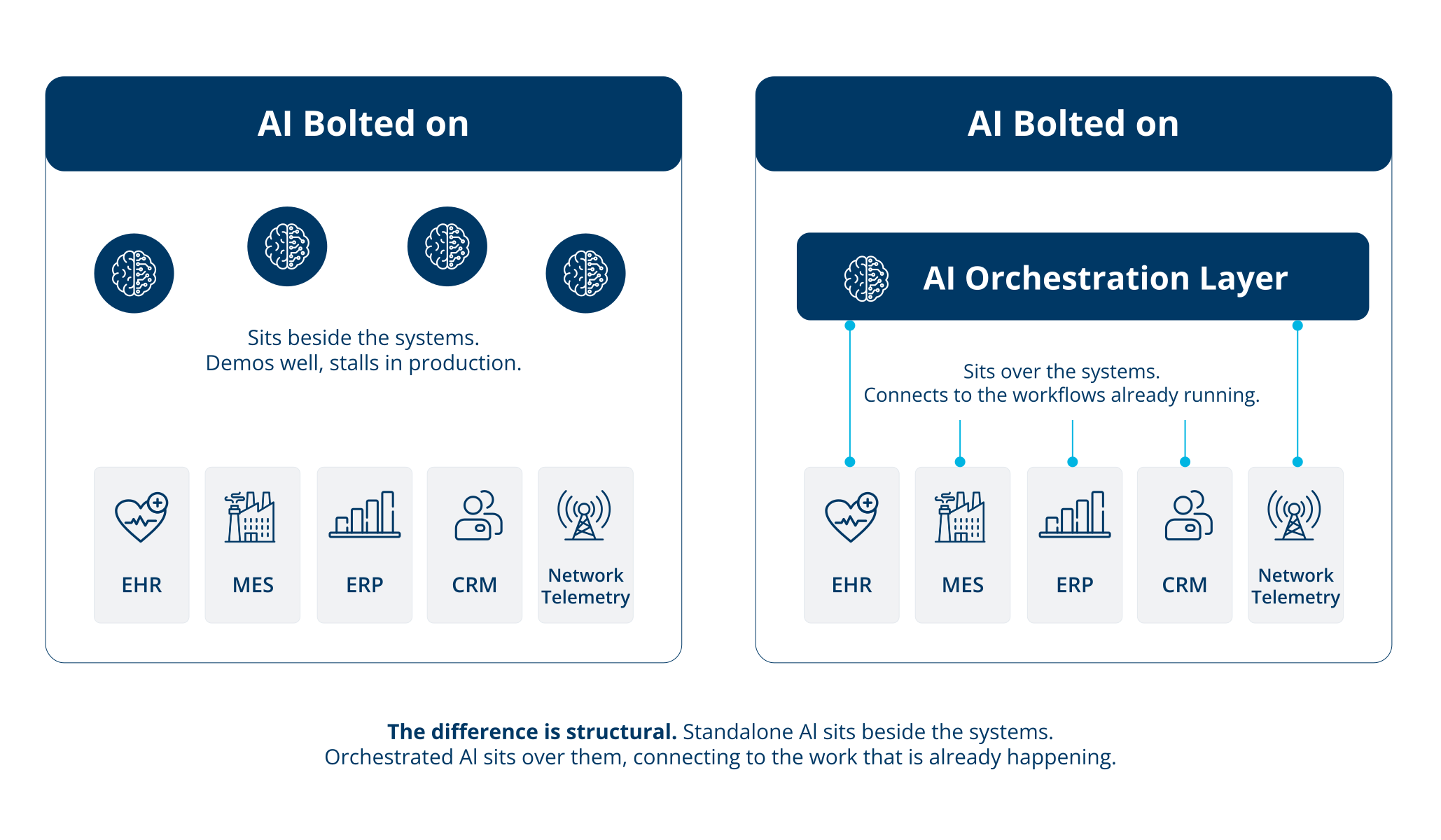
Enterprises do not run on a single system. They run on a stack of them, an EHR or a claims system, an MES or an ERP, a network management platform, accumulated over years and holding the workflows the business actually depends on. When AI is added as one more standalone tool beside that stack, it does not connect to the work. It demos well and then stalls.
AI orchestration means the opposite. Instead of bolting AI on beside the systems of record, it works as a layer over them, coordinating and AI-enabling what is already running without ripping anything out. The systems stay. The workflows stay. The AI becomes the connective layer that makes them more capable than they were.
Why vertical AI orchestration is more than the sum of its parts
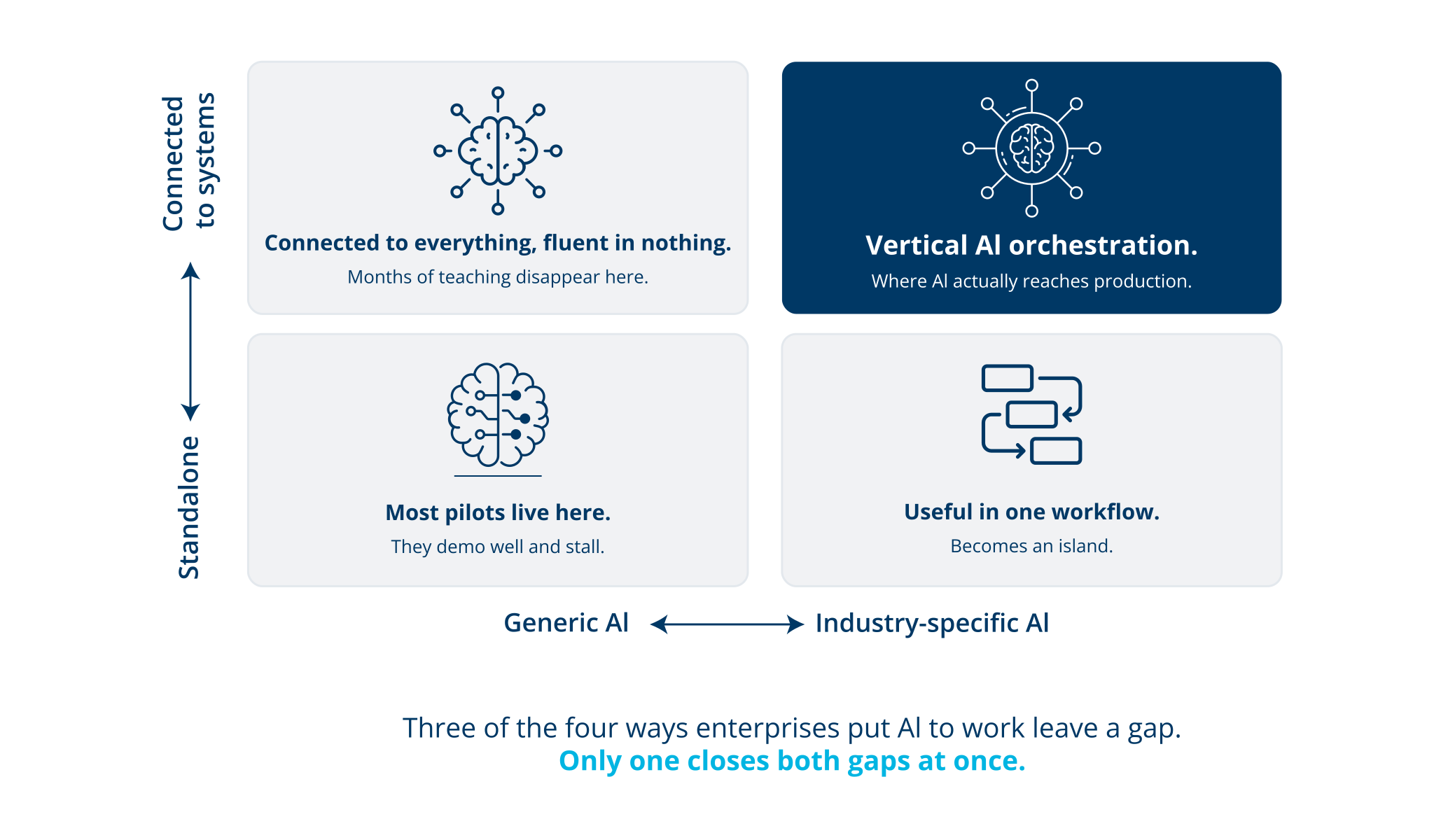
Each idea delivers value on its own. Vertical AI produces real results inside a single workflow. Orchestration brings order to a sprawl of AI tools. But each one alone leaves a gap.
Vertical AI on its own can become an island, fluent in the industry but disconnected from the other systems the business runs on. Orchestration on its own can coordinate AI components that still do not understand the work, connecting tools that do not fit the workflow.
Vertical AI orchestration closes both gaps at once. It is industry-fluent and connected across that industry’s systems, which is what it takes to move AI from a working pilot to production at scale. That combination is the reason the category exists, and it answers a problem the numbers make impossible to ignore.
Why most enterprise AI never reaches production
The instinct is to blame the models. The real blocker is fit and connection. Generic AI does not understand the work, and standalone AI does not connect to it.
The numbers make the gap impossible to ignore. HFS Research finds that roughly 80% of large enterprises plan to replace human-led services with AI-led solutions. The execution tells a very different story: in the same research, only 5% to 7% of enterprises are fully scaling AI solutions, held back by challenges with data, processes, and culture.
That gap is not unique to one analyst. McKinsey’s State of AI 2025 survey of nearly 2,000 organizations found that just 6% qualify as AI high performers, attributing more than 5% of EBIT to AI, while nearly two-thirds had not begun scaling AI across the enterprise at all. McKinsey attributes the gap to AI that never gets integrated into workflows and processes.
Vertical AI orchestration is the approach built to close both gaps, which is why it is moving from a phrase in the market to a category the enterprises are actively evaluating.
Vertical AI orchestration platform: where VeltrisOne fits
A vertical AI orchestration platform is the productized form of this idea. VeltrisOne™ is the Vertical AI Orchestration Platform that securely AI-enables industry workflows for micro-industries. It does not list AI tools for buyers to assemble, and it does not stay generic. It arrives fluent in an industry and sits as a layer over the systems an organization already runs, organized into industry clouds, with industry-specific applications, autonomous agents, and a data and integration fabric connecting it all to live systems.
The full picture, what is inside VeltrisOne and which industries it serves today, is in the VeltrisOne: the Vertical AI Orchestration Platform, explained.
Veltris is recognized for its Vertical AI leadership, named to Constellation Research’s Top 30 AI-First Service Firms and featured in HFS Research’s Challengers’ Code report.
From defining the category to closing the gap
Defining the category is the easier part. The harder question, the one every enterprise AI buyer is trying to answer, is why so much of the AI they have already piloted never reached production. That failure pattern is more specific than “AI is hard,” and it is the subject of the next piece in this series.
For now, what matters is this: orchestration is not generic coordination, vertical is not horizontal, and the difference between an AI project that ships and one that quietly does not is the layer doing the connecting.
See it on your own workflows. Request a demo at veltris.ai, tailored to a specific industry workflow.