
Mobile E-commerce App Development Benefits and Guide 2023


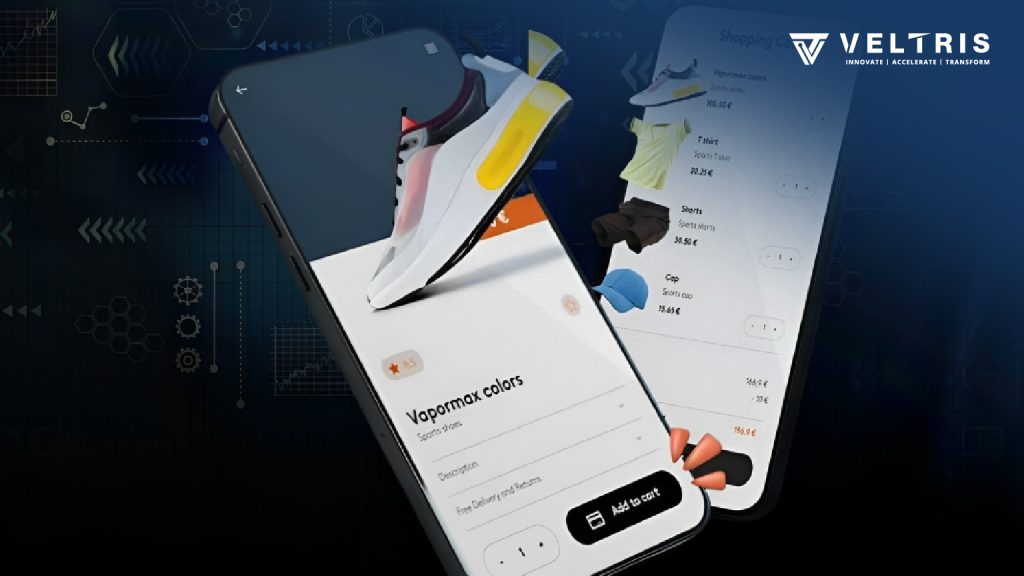
In today’s digital age, e-commerce has become a powerhouse, transforming the way we shop and conduct business. According to Statista, global e-commerce sales are projected to reach a staggering $6.54 trillion by 2023. With the rapid growth of online retail, businesses are embracing the potential of e-commerce apps to connect with customers and drive sales. E-commerce apps break down geographical barriers, enabling businesses to reach a global audience. By developing a user-friendly app, businesses can tap into new markets and attract customers who prefer the convenience and accessibility of online shopping.
E-commerce apps provide a streamlined platform where users can browse, compare, and purchase products with just a few taps. By optimizing the user interface and integrating secure payment gateways, businesses can deliver seamless and satisfying shopping experiences. With all this on track let us crack the secret code of e-commerce app development and its essentiality in the current market.
Why do Businesses need to Develop E-Commerce Apps?
No wonder today’s businesses are constantly looking for innovative ways to stay ahead of the competition and reach their target audience effectively. The development of e-commerce apps has become a crucial aspect of business strategy, and here’s why:
- Expanding Reach
An e-commerce app allows businesses to break free from the constraints of physical locations and extend their reach globally. With a few taps on a smartphone or tablet, customers from around the world can access a business’s products or services.
- Increased Sales and Revenue
With an e-commerce app, businesses can tap into a 24/7 marketplace. Customers can make purchases at their convenience, irrespective of time zones or geographical boundaries. This accessibility leads to increased sales opportunities, as businesses can reach customers when they’re most likely to buy. Moreover, by leveraging targeted marketing and personalized recommendations, e-commerce apps can boost upselling and cross-selling, further driving revenue growth.
- Data-Driven Insights
E-commerce apps provide valuable data that businesses can leverage to understand customer behavior, preferences, and buying patterns. By analyzing this data, businesses can make informed decisions to improve their products, services, and marketing strategies. This wealth of information enables businesses to stay ahead of market trends, identify new opportunities, and optimize their operations for maximum efficiency.
- Brand Building
An e-commerce app acts as a direct channel between businesses and their customers, providing a unique opportunity for brand building and customer engagement. By creating a visually appealing and user-friendly app, businesses can reinforce their brand identity and connect with customers on a deeper level. Through push notifications, personalized offers, and loyalty programs, businesses can foster lasting relationships and brand loyalty.
- Cost-Effectiveness
Traditional brick-and-mortar establishments require significant investment in rent, utilities, and staff. In contrast, e-commerce apps offer a cost-effective alternative. While app development may require an initial investment, it eliminates many overhead costs associated with physical stores. By automating processes and reducing the need for extensive manpower, businesses can streamline operations, increase efficiency, and allocate resources to other critical areas of growth.
E-commerce App Types
When it comes to e-commerce app types differ in terms of their functionality, design, and the specific market they serve. Let’s explore now!
- Retail E-commerce Apps
Retail e-commerce apps are the most common type, allowing businesses to directly sell their products to customers online. Generally at WAL, we provide features such as product catalogs, shopping carts, secure payment gateways, user profiles, and order tracking. Our team designs retail e-commerce apps for mobile (iOS, Android) or web platforms, or even both.
- On-Demand Delivery Apps
On-demand delivery apps enable connection with customers to local service providers or businesses to fulfill immediate needs. Examples include food delivery apps, grocery delivery apps, and ride-hailing apps. We design this type of app with features such as real-time tracking, secure payments, reviews, and ratings for service providers.
- Subscription-based Apps
Subscription-based e-commerce apps provide products or services on a recurring basis. Customers pay a subscription fee to access offerings regularly. These apps are commonly used for streaming services, SaaS platforms, and online education platforms. Well, we include features like personalized recommendations, user profiles, and flexible subscription management.
- Marketplace Apps
Marketplace apps serve as a platform for multiple sellers and buyers to conduct transactions in one place. Marketplace apps establish a virtual marketplace where sellers can list their products or services. Customers can browse and make purchases from different sellers. Some of the irreplaceable features of marketplace apps include seller profiles, ratings, reviews, and secure payment systems.
- Social Commerce Apps
Social commerce apps combine e-commerce with social networking features. At WAL, we design apps that support users to discover and purchase products within the social media environment. Users can follow brands, influencers, or friends, engage in discussions, leave reviews, and provide recommendations. By leveraging social media data, these apps enhance personalized shopping experiences.
- B2B (business-to-business) E-commerce Apps
B2B e-commerce apps cater to businesses selling products or services to other businesses. Our e-commerce app development team offer features such as bulk ordering, account management, invoicing, and integrations with enterprise resource planning (ERP) systems. We have designed B2B e-commerce apps that support businesses to streamline efficient goods purchases or services.
What eCommerce Platform Should You Choose When Developing Mobile Apps?
Consider these popular eCommerce platforms when developing a mobile app for your business:
- Shopify
With its user-friendly interface and extensive app store, Shopify is a leading eCommerce platform. It offers easy customization, secure payment, and third-party service integration. Shopify is an excellent choice for beginners or small businesses seeking a hassle-free development experience.
- WooCommerce
WooCommerce provides a flexible and customizable eCommerce solution. It offers various plugins and APIs, enabling smooth integration with WooCommerce-powered online stores. WooCommerce is particularly beneficial for businesses already using WordPress as their content management system.
- Magento
Magento offers dedicated mobile app development frameworks and APIs, facilitating the creation of native or hybrid mobile apps with extensive customization options. Magento’s scalability and advanced features make it suitable for large-scale enterprises’ eCommerce needs.
- BigCommerce
BigCommerce provides a comprehensive set of tools for mobile app development. Pre-built themes, APIs, and SDKs enable developers to create feature-rich mobile apps seamlessly integrated with BigCommerce stores.
- Salesforce Commerce Cloud
Salesforce Commerce Cloud offers a mobile-first approach with advanced mobile app development capabilities. It provides extensive customization options and comprehensive support matching large enterprise needs.
E-commerce App Development Trends
E-commerce app development is continually evolving to meet the changing needs and preferences of businesses and consumers. Here are some prominent trends in e-commerce app development:
- Mobile-First Approach
With the increasing use of smartphones, e-commerce apps are prioritizing mobile experiences. Developers are adopting a mobile-first approach to ensure seamless and optimized user experiences on mobile devices. This includes responsive designs, intuitive navigation, and mobile-specific features like touch gestures and push notifications. For instance, the Amazon app offers a seamless and optimized mobile experience with features like one-click ordering, personalized recommendations, and easy navigation.
- Voice Commerce
The rise of voice assistants like Amazon Alexa and Google Assistant has led to the emergence of voice commerce. E-commerce apps are incorporating voice-enabled features, allowing users to search for products, and place orders using voice commands. Voice commerce enhances convenience and accessibility for users, especially in hands-free situations.
- Progressive Web Apps (PWAs)
PWAs combine the best of web and mobile app experiences. PWAs offer the convenience of accessing an app through a web browser while providing app-like features and functionalities. PWAs provide fast loading times, offline capabilities, push notifications, and a seamless user experience across devices. Pinterest is a popular example of a PWA that offers fast loading times, offline capabilities, and push notifications.
- Customer Relationship Management (CRM) Integration
CRM integration in e-commerce apps enables businesses to manage customer interactions, track communication, and build stronger relationships. By integrating CRM systems, businesses can gain a comprehensive view of customer data, provide personalized support, and implement targeted marketing campaigns. For example, Shopify, a leading e-commerce platform, integrates with CRM systems like HubSpot and Salesforce, allowing businesses to manage customer interactions.
• Artificial Intelligence (AI)
AI technologies are revolutionizing e-commerce app development. AI-powered chatbots and virtual assistants can handle customer queries, provide real-time support, and offer personalized recommendations. AI enhances efficiency, personalization, and automation in e-commerce apps.
- Augmented Reality (AR) and Virtual Reality (VR)
AR and VR technologies are transforming the e-commerce experience by enabling users to visualize products virtually. E-commerce apps are integrating AR and VR features that allow customers to try on clothes, visualize furniture in their space, or explore virtual showrooms. IKEA Place is an app that uses AR to enable users to virtually place furniture in their homes to see how it fits, creating an interactive and immersive shopping experience.
- Internet of Things (IoT)
The Internet of Things connects physical devices to the Internet, enabling seamless data exchange. IoT can facilitate personalized marketing, real-time inventory tracking, and automated order fulfillment. It enhances convenience and enables businesses to deliver contextual experiences. For example, the Philips Hue app allows users to control and customize their smart lighting solutions, including adjusting color, brightness, and scheduling, creating a personalized ambiance for their shopping experience.
- Chatbots and Virtual Assistants
Chatbots and virtual assistants are increasingly employed in e-commerce apps to provide instant customer support and personalized recommendations. These AI-driven conversational interfaces simulate human-like interactions and can assist customers with product inquiries, order tracking, and issue resolution. The eBay app incorporates AI-powered chatbots to assist users with product searches, answer inquiries, and offer personalized recommendations.
West Agile Labs E-commerce App Development Process
The Agile Scrum approach is one we embrace at West Agile Labs to create exceptional e-commerce app development. Our ability to integrate Agile concepts into our development process, enabling us to continuously iterate and advance, is what makes us special. Let’s now go further into the many phases of our distinctive development approach:
Phase 1: Business Analysis
Beginning with product analysis, our team digs deep into market research and competitor insights to create a unique e-commerce app development feature set. We also scrutinize the technical feasibility of our plans through architecture analysis. Finally, we document business requirements, timelines, and features in a well-organized way.
Phase 2: UX Research
The focus at West Agile Labs is always on the user. In order to comprehend their requirements, preferences, and behaviours, we go headfirst into in-depth user research. With this essential knowledge, our team uses it to produce amazing UX prototypes and wireframes that actualize the e-commerce app. Additionally, we guarantee that each interaction and interface is user-friendly and aesthetically pleasing.
Phase 3: Technical Feasibility
We at West Agile Labs are tech smart as well as attractive. Based on the needs of the project and technical factors, we choose the technological stack with care. For both front-end and back-end development, our great brains hand-pick the ideal programming languages, frameworks, libraries, and tools.
Phase 4: Platform Development
We build the e-commerce app module by module with an iterative attitude. Infrastructure, database, and front- and back-end components all work together seamlessly. Based on the product backlog, we prioritize features and functions. We guarantee smooth communication and transparency through frequent sprint meetings and demos.
Phase 5: Testing
Our concern is quality, and the secret is thorough testing. To put our e-commerce app through its paces, we devise detailed test plans and scenarios and implement a thorough testing procedure, checking functionality, performance, and security. We track and manage any annoying defects or issues that come our way with the use of cutting-edge project management tools like JIRA. For each sprint, our team does routine testing to uphold our high benchmarks.
Phase 6: User Acceptance Testing (UAT)
We do User Acceptance Testing (UAT) with our clients because we think it’s important to put ourselves in their shoes. This essential stage collects insightful input while validating the e-commerce app’s functionalities. To guarantee a flawless user experience and make our clients happy, we promptly resolve any faults or problems that arise.
Phase 7: Deliveries and Release
We take great delight in deploying the e-commerce application in a variety of environments, including development, staging, and production. We configure and test each environment with painstaking attention to detail in order to guarantee a smooth transition. The distribution of the completed product to our esteemed customers then signifies the completion and success of the development of the e-commerce software.
Must have Features of E-commerce App Development
Here are some must-have features for e-commerce app development,
- Swift Registration and Authentication
Get users on board quickly with a seamless and secure registration process. West Agile Labs’ development team expertise ensures that user authentication is quick and hassle-free, providing a solid foundation for personalized experiences and secure transactions.
- Product Catalog
Showcase your products in an enchanting catalog that mesmerizes users. With West Agile Labs’ innovative design approach, your catalog will be visually stunning, complete with appealing product images, engaging descriptions, and transparent pricing and availability information.
- Effortless Shopping Cart
West Agile Labs’ development team will create a cart that offers a smooth and intuitive experience, allowing users to add, modify, and remove items with ease. You can even save items for later, ensuring a stress-free shopping experience.
- Diverse Payment Options
Expand the horizons of payment options for your users with seamless integration of various secure payment gateways. West Agile Labs’ developers possess extensive experience in integrating popular payment methods, including credit/debit cards, digital wallets, and renowned platforms like PayPal.
- Real-Time Order Tracking
Keep users informed and excited with real-time order tracking. Through integration with shipping providers’ APIs, West Agile Labs ensures users can easily track their orders, and stay updated on order status, shipping details, and estimated delivery dates. It’s a surefire way to keep users engaged and delighted.
- Authentic Ratings and Reviews
Foster a community of trust and transparency by allowing users to share their honest feedback, ratings, and reviews. West Agile Labs’ development team crafts rating feature that encourages user participation and empowers potential buyers to make well-informed decisions.
- Wish Lists
Empower users to create wishlists that spark joy and anticipation. West Agile Labs’ developers incorporate an intuitive and user-friendly wishlist feature, enabling users to save and organize desired items effortlessly, ensuring a delightful shopping experience.
- Intelligent Analytics and Reporting
Leverage actionable insights through robust analytics and reporting tools. West Agile Labs’ developers will implement powerful analytics systems that track user behavior, identify popular products, monitor sales trends, and optimize your app’s performance, allowing you to make informed business decisions.
- Mobile Magic
Craft an enchanting mobile experience that leaves users spellbound. West Agile Labs’ development prowess ensures your app is seamlessly optimized for mobile devices, delivering a responsive design, intuitive navigation, and lightning-fast loading times, ensuring an attractive shopping experience on the go.
In a Nutshell
E-commerce app development is an exciting journey that demands meticulous planning and attention to detail. Incorporating a comprehensive set of features like user registration, product catalog, secure payment integration, and order management, it enthralls the shopping experience for your customers.
To thrive in the competitive e-commerce market, it’s essential to leverage the power of analytics and reporting tools. By monitoring user behavior, sales trends, and performance metrics, you can make data-driven decisions and continuously optimize your app to meet customer expectations. However, it’s crucial to remember that e-commerce app development is a collaborative effort between a client and a skilled development team. With the right combination of features, a captivating design, and a user-centric approach, your e-commerce app has the potential to thrive in the digital marketplace and establish a strong brand presence.




